Skip to content
Have you ever noticed those tiny baby hairs on your face, the soft peach fuzz that somehow always appears when you’re applying foundation?
They catch the light, make makeup cling unevenly, and can leave your skin looking a little less smooth than you’d like. That’s where dermaplaning comes in.
This professional exfoliation treatment has become one of the beauty world’s favorite secrets for instantly smoother, more radiant skin. It doesn’t just remove those fine facial hairs; it also gently lifts away dull, dead skin cells that can block your glow.
Its after-effect on the skin? A clean, smooth surface that helps your skincare absorb better and your makeup look airbrushed.
From celebrity facials to everyday med spa routines, dermaplaning has gone mainstream for good reason. But is it really as safe and transformative as everyone says? Understanding Dermaplaning Pros and Cons is essential before getting started.
In this blog, we’ll explore what dermaplaning actually does, how it works, its pros and cons, and what you can expect from your session at Clearstone Laser Hair Removal & Med Spa, so you can decide if it’s the proper treatment for your skin.
What Is Dermaplaning & How Does It Work?
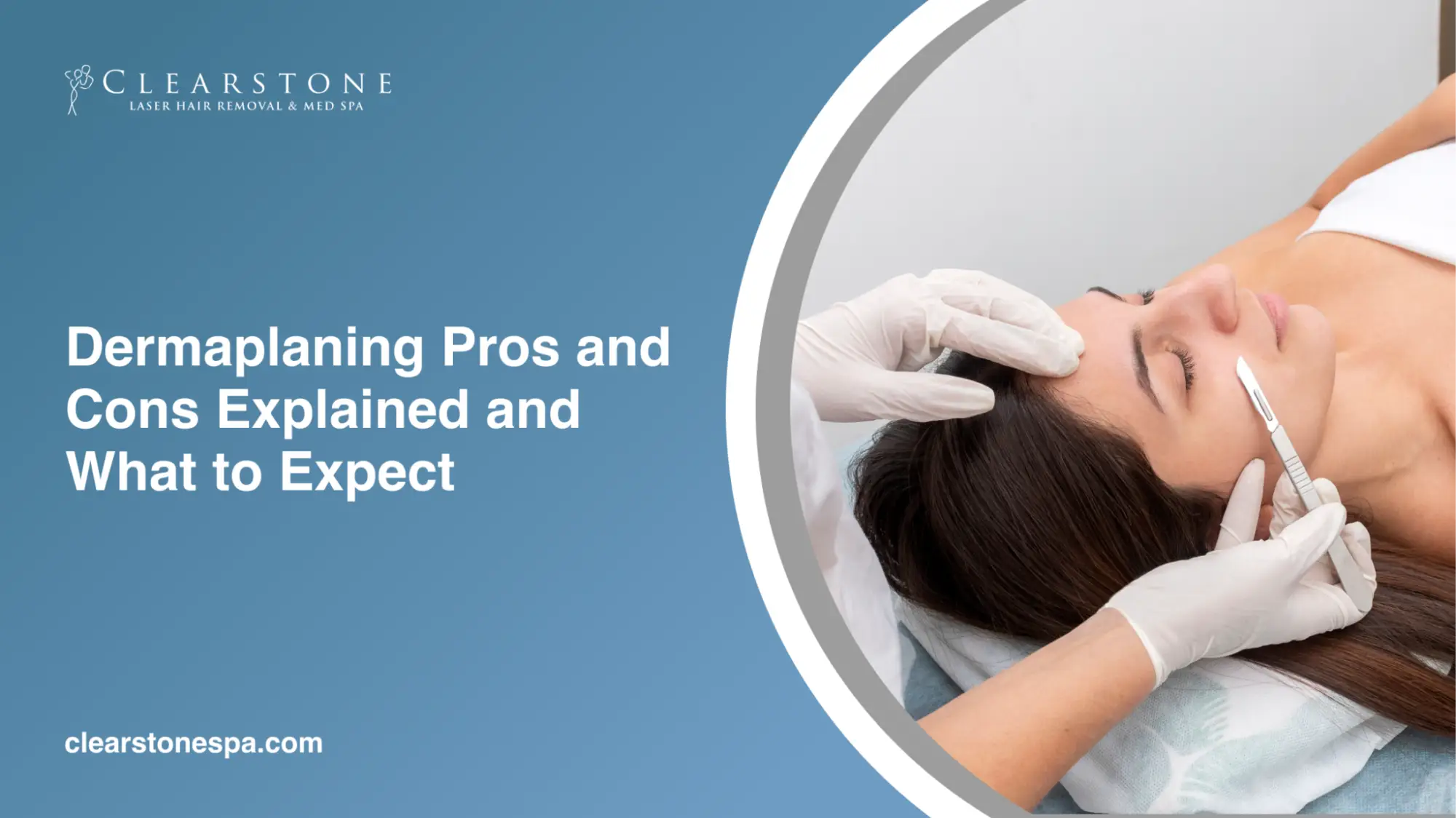
Dermaplaning is a non-invasive exfoliation treatment that uses a sterile surgical-grade blade to gently remove dead skin cells and fine vellus hair (peach fuzz) from the surface of your face.
The treatment helps smooth rough texture, brighten dullness, and even out uneven tone. By removing the barrier of dead cells, dermaplaning reveals fresh, radiant skin beneath, with no chemicals, no needles, just precision and skill.
A licensed aesthetician or dermatologist performs the procedure, which typically takes 30 minutes to 1 hour.
Expert insight: According to dermatologists, dermaplaning is all about controlled exfoliation. The sterile blade is held at a 45-degree angle and moved gently across the skin to lift away buildup that even your best scrub or cleanser can’t reach.
What Happens During a Dermaplaning Session
If you’ve never tried it before, the process is simple, comfortable, and surprisingly relaxing. Here’s what typically happens:
- Cleanse: Your skin is gently but thoroughly cleansed to remove any traces of oil, makeup, and impurities, creating a clean canvas for treatment.
- Precision Exfoliation: Using light, gentle strokes, your aesthetician glides a sterile, derma-approved, surgical-grade blade across your skin’s surface to gently lift away dead cells and fine vellus hair (peach fuzz). You’ll feel a gentle brushing or scraping sensation, not painful, just deeply satisfying as your skin is instantly refined.
- Soothe & Protect: The treatment finishes with a hydrating serum or cooling mask, followed by a nourishing moisturizer and SPF to shield and calm your freshly revealed skin.
Optional add-ons, such as red light therapy or calming masks, can enhance the glow factor. There’s no downtime, just a soft, radiant complexion and maybe a hint of pinkness that fades within hours.
Dermplaning Pros and Cons
Pros
- Instant Radiance: Removes the dull surface layer and buildup, revealing visibly brighter, smoother skin immediately after treatment.
- Better Product Absorption: With dead skin removed, your serums and moisturizers can penetrate more effectively, allowing your skincare to work smarter.
- Flawless Makeup Application: Foundation and concealer glide on seamlessly, creating a smooth, airbrushed finish that lasts longer.
- Removes Peach Fuzz: Bids farewell to those tiny facial hairs that can catch light or makeup, giving you a polished look.
- Quick & Non-Invasive: Takes less than an hour, with zero downtime, perfect for a same-day glow-up.
Expert Note: At Clearstone, our licensed specialists often recommend dermaplaning as a preparatory step before treatments like Microneedling, VI Peel, or Pumpkin Glow Facial, as it allows actives to penetrate more deeply and deliver even better results.
Cons
No treatment is perfect, and dermaplaning is no exception. Here’s the real talk:
Temporary Results: The glow typically lasts 3 to 4 weeks, approximately one skin cell renewal cycle.
Possible Irritation: If your skin is sensitive, you might experience temporary redness or mild flaking.
Not for Everyone: Those with active acne, rosacea, or eczema should avoid dermaplaning until the skin is calm. The blade could worsen inflammation.
DIY Risks: At-home dermaplaning tools exist, but they can lead to nicks, irritation, or even infection if used incorrectly.
Maintenance Needed: Dermaplaning isn’t a one-time fix. To maintain that smooth glow, you’ll need consistent sessions every 4–6 weeks, which can add up over time.
When performed by trained professionals like those at Clearstone, dermaplaning is incredibly safe and effective with minimal side effects.
Dermaplaning for Different Skin Types
Understanding dermaplaning pros and cons also depends on your skin type. Here’s how it works for each:
Dry Skin
If your skin often feels tight, flaky, or rough, dermaplaning can be a good option. The treatment gently removes the layer of dead, dry cells that sit on the surface, allowing your moisturizer to do its job effectively.
Clearing away that barrier allows hydrating serums and creams to absorb more effectively, instantly restoring suppleness and glow. Afterward, your skin feels smoother, softer, and far more receptive to moisture, like a fresh canvas ready to soak in all the goodness of your skincare routine.
Mature Skin
As we age, our skin naturally loses elasticity and becomes slower to renew itself. Dermaplaning provides a non-invasive method to restore youthful radiance. By lifting dull surface cells and fine vellus hair, it softens fine lines, refines texture, and enhances product absorption.
For mature skin, it’s a gentle yet effective refresh that brightens and revitalizes without harsh acids or recovery time.
Sensitive Skin
For sensitive complexions, dermaplaning can still be a safe option, provided it is handled with care. Professional aestheticians use lighter pressure and pair the treatment with calming products to minimize irritation.
A pre-treatment consultation or patch test ensures your skin barrier is strong enough to tolerate exfoliation. When performed gently and professionally, dermaplaning can actually help sensitive skin appear smoother and more even over time.
Oily or Acne-Prone Skin
If you struggle with excess oil or congestion, dermaplaning helps by removing surface buildup that traps sebum and dead cells. However, it’s best to avoid the treatment during active breakouts, as it can spread bacteria and worsen inflammation.
At Clearstone, your esthetician may first recommend treatments like a VI Peel to clear and calm the skin. Once your acne is under control, dermaplaning becomes an excellent maintenance treatment to smooth texture, reduce post-acne dullness, and keep pores clear.
At Clearstone Laser Hair Removal & Med Spa, every dermaplaning session is tailored to your skin type, ensuring you achieve a radiant glow with minimal guesswork. Whether your goal is hydration, balance, or renewal, our specialists tailor each treatment to reveal your smoothest, healthiest, and most confident skin.
Can You Dermaplane at Home?
Technically, yes, but professionals strongly advise against it. While drugstore dermaplaning tools are marketed as safe, they’re not the same as professional-grade blades or techniques.
Improper angle or pressure can lead to cuts, irritation, or ingrown hairs. Without proper sterilization, you could even introduce bacteria to freshly exfoliated skin.
If you love the concept of smoother skin, book a professional session instead. At Clearstone, our trained specialists customize each treatment to your skin type and sensitivity level, safely and effectively.
What to Expect After Dermaplaning
Immediately after treatment, your skin will look and feel noticeably smoother, softer, and brighter. Makeup glides on effortlessly, and you might even catch yourself touching your face more than usual (don’t worry, everyone does).
Mild redness or sensitivity can occur but usually fades within a few hours.
Aftercare Tips
- Avoid exfoliating acids, retinol, or scrubs for 2–3 days.
- Keep skin hydrated with a gentle moisturizer.
- Apply at least 50 + SPF daily, especially on freshly exfoliated skin, which is more sensitive to the sun.
- Skip direct sunlight or saunas for at least 24 hours.
Follow these, and your glow will last even longer.
Is Dermaplaning Worth It?
If you’re looking for a fast and effective way to achieve smoother, more radiant skin with minimal downtime, dermaplaning is definitely worth trying. Reviewing the dermaplaning pros and cons shows that although the results aren’t permanent, the instant glow and refined smoothness are hard to beat.
Safe for most skin types when performed by licensed professionals, it delivers mirror-ready results that your photos and your confidence will thank you for.
While maintenance sessions are needed to keep the effect, the payoff is a fresh, youthful glow that feels like a real-life filter.
Experience Expert Dermaplaning at Clearstone Laser Hair Removal & Med Spa
There’s a reason dermaplaning has become a must-try treatment for glowing, camera-ready skin: it delivers visible results instantly. At Clearstone Laser Hair Removal & Med Spa, our expert estheticians combine precision, comfort, and science-backed techniques to ensure your skin looks and feels its absolute best after every session.
Each dermaplaning treatment is tailored to your skin’s unique needs, enhancing smoothness, brightness, and long-term skin health. Whether you’re prepping for a special event or simply want to maintain that fresh, radiant glow, we’ll help you achieve results that feel as good as they look.
Book your FREE consultation today and let Clearstone’s specialists reveal your most confident, luminous skin yet.