Skip to content
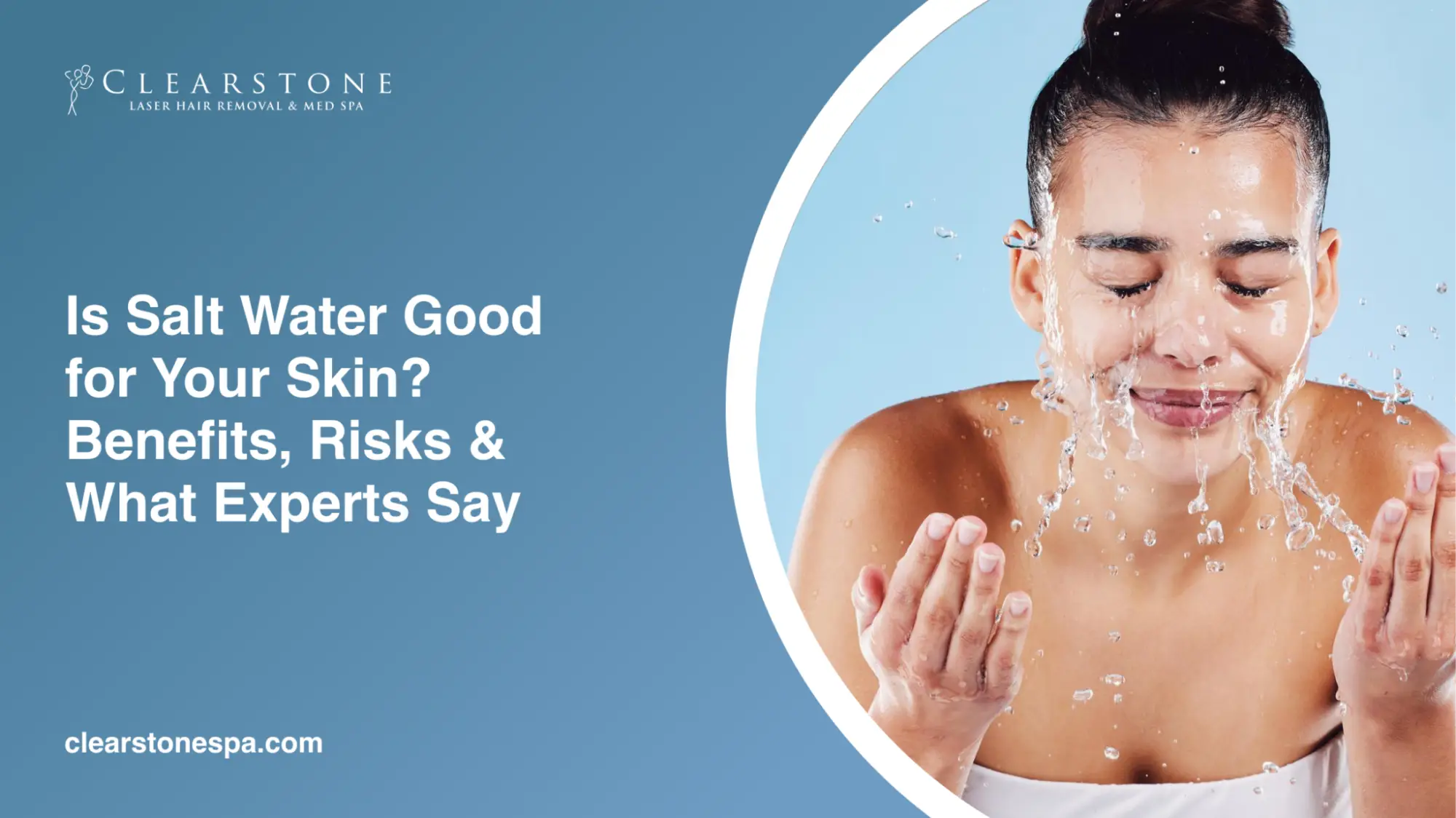
Saltwater skincare trends are everywhere right now. TikTok creators splash their faces with homemade sea-salt toners. Beach lovers swear their skin feels clearer, softer, and brighter after a dip in the ocean. And if you’ve ever returned from a vacation with that smooth, glowing “beach skin”, you might wonder whether salt water deserves the credit.
But is salt water actually good for your skin, or is it another skincare myth that only works under certain conditions?
In this blog, we break down the real science behind saltwater for skin, the benefits and risks, what dermatologists say, how to try it safely, and which Clearstone-approved options actually deliver better results without damaging your barrier.
Why People Think Salt Water Helps the Skin
Many people associate ocean water with softer, clearer, fresher-looking skin. Salt water has been used since ancient times as a natural cleanser and disinfectant. Even today, it’s believed to help with exfoliation and oil control.
Here’s what makes salt water appealing:
- It lightly exfoliates dead skin
- It temporarily reduces surface oils
- It can make pores look smaller
- It gives a tight, fresh finish
- It helps unclog debris from the surface
But these benefits come with critical limits and potential downsides, primarily when misused.
Is Salt Water Good for Your Skin? The Real Benefits
Salt water can offer some genuine skincare advantages. Still, it’s not a miracle ingredient, and the results tend to be mild, temporary, and most noticeable for people with oily or acne-prone skin.
Dermatologists emphasize that the type of salt water, how often you use it, and your unique skin barrier all make a huge difference.
Below are the most commonly cited benefits, along with what’s actually happening beneath the surface.
Mild Exfoliation
Salt acts as a natural exfoliant. Even when dissolved, it still creates a light abrasive effect that helps loosen dead skin cells sitting on the surface.
How this helps:
- Improves rough texture
- Reveals fresher, smoother skin
- Helps skincare products absorb a little better
- Makes the skin feel cleaner instantly
But remember, this is surface-level exfoliation. It won’t replace chemical exfoliants, professional treatments, or consistent skincare.
Oil Absorption & Detoxifying Effect
Salt draws out excess oil through osmosis. This temporarily reduces greasiness and can make pores look smaller.
Why this matters for oily or acne-prone skin:
- Reduces shine
- Helps unclog superficial debris
- Gives a tighter, mattified appearance
It’s important to note that this effect is short-lived. Overuse can actually cause the skin to rebound and produce more oil.
Antibacterial Properties
Salt has natural antimicrobial qualities, which may help decrease the presence of acne-causing bacteria on the skin’s surface.
This can support:
- Cleaner pores
- Reduced buildup of harmful bacteria
- Lower chances of minor surface breakouts
However, dermatologists agree on one thing: salt is not an acne treatment. It cannot replace ingredients like benzoyl peroxide, retinoids, or salicylic acid.
Cleaner, Fresher-Looking Skin
Salt water helps dissolve and loosen the buildup that accumulates throughout the day. This is why many people feel their skin looks “fresh” after a splash of seawater.
Salt water breaks down:
- Dirt
- Sunscreen residue
- Sweat
- Pollution particles
- Cogged oil at the surface
This creates the illusion of clearer skin, especially when paired with the natural humidity and cleansing effect of ocean waves.
Circulation Boost (From the Beach Experience, Not DIY Salt Water)
The glowing skin you get after a beach day has less to do with salt water and more to do with:
- Gentle sun warmth
- Increased blood flow from movement
- Improved oxygenation
- Higher humidity levels
- Natural sweating
All of these combined create a temporary radiance that people often credit to salt water, even though the salt itself is only a small part of the equation.
Why Salt Water Can Also Damage Your Skin
Salt water may sound natural and harmless, but dermatologists caution that it can be surprisingly harsh on the facial skin barrier. When used too often, in high concentrations, or on the wrong skin type, it can do more harm than good. Here’s what you really need to know before splashing your face with salt.
Dryness & Tightness: Salt is extremely dehydrating. It pulls water out of your skin through osmosis, which is why your skin may feel tightened, stripped, or rough after repeated use. This dehydration can:
- Worsen flakiness
- Emphasize fine lines
- Create a dull, tired look
- Makeup clings to dry patches
People often confuse the initial tightening with “clean skin”, but it’s actually a sign of lost moisture.
Irritation or Redness: Sensitive or reactive skin can flare up quickly when exposed to salt water. This may show up as:
- Burning
- Stinging
- Itching
- Blotchiness
- Warm, red patches
Salt particles, especially if undissolved, can behave like micro-scrubs, further increasing irritation.
Skin Barrier Disruption: Your barrier is made of lipids, proteins, and ceramides that keep moisture in and irritants out. Salt water can strip away these protective components.
A disrupted skin barrier may lead to:
- Heightened sensitivity
- Recurring irritation
- Increased breakouts
- Delayed wound healing
And it can also worsen pre-existing concerns, such as:
- Eczema
- Rosacea
- Dermatitis
- Acne flare-ups
This is why dermatologists rarely recommend using salt water on the face, unless it’s very occasional and significantly diluted.
Increased Hyperpigmentation Risk: When your skin barrier is compromised, your skin becomes more prone to post-inflammatory hyperpigmentation (PIH).
Salt-induced irritation can lead to:
- Dark patches
- Uneven tone
- Stubborn marks after breakouts
- Discoloration in deeper skin tones
This is particularly important for Indian, Middle Eastern, and deeper Fitzpatrick skin types, where PIH forms quickly and lingers longer.
Not Safe for Certain Skin Conditions: Salt water should be avoided entirely if you have:
- Active eczema
- Rosacea
- Psoriasis
- Broken or irritated skin
- Sunburned skin
These conditions already involve inflammation, impaired barriers, or micro-tears. Salt will sting, worsen inflammation, and slow healing.
How to Use Salt Water Safely (If You Still Want to Try It)
Dermatologists agree that salt water can be used occasionally, but it should be approached with caution. Salt is naturally drying and can irritate the skin if used incorrectly or too often. If you still want to experiment, here’s the safest way to do it without compromising your skin barrier.
How Often Should You Use Salt Water?
Limit it to once or twice per week, never daily. Using salt water too frequently can trigger:
- Dryness
- Irritation
- Increased sensitivity
- Flare-ups of conditions like eczema or acne
Salt water should be treated like an exfoliant, not a regular cleanser.
How to Make a Safer Salt Water Solution
If you’re planning to try salt water on your face, the formula matters. A homemade mixture that’s too salty or improperly prepared can irritate, sting, or damage your skin barrier. This dermatologist-aligned method ensures your solution is mild, hygienic, and less likely to cause sensitivity.
Step 1. Boil the Water: Use 2 cups of clean tap water and bring it to a full rolling boil for at least 2 to 3 minutes.
Why this step matters:
- Boiling removes common impurities found in tap water.
- It kills bacteria that could otherwise cause irritation or breakouts.
- It creates a more sterile base for your saltwater mixture.
Allow the water to sit for a few minutes after boiling, so it cools slightly before adding salt.
Step 2. Add the Salt: Stir in 1 teaspoon of fine sea salt.
Why this ratio works:
- Fine sea salt dissolves fully, creating a smooth solution that won’t scratch your skin.
- Coarse salt crystals are too abrasive, even when mixed with water, and can create micro-tears in the skin.
- Increasing the salt concentration does not increase skin benefits. In fact, too much salt makes the solution overly drying and irritating.
Tip: Sea salt is preferred because it contains trace minerals that may be gentler than highly processed table salt.
Step 3. Cool Completely Before Use: Allow to reach room temperature. Why cooling is essential:
- Warm salt water can trigger redness or irritation.
- Hot water strips moisture quickly, leaving your skin tight or inflamed.
- Applying hot liquids to the face increases the risk of barrier damage, especially if your skin is already sensitive.
Never use salt water while it’s still warm or steaming.
Step 4. Store Safely: Transfer the prepared solution into a clean, airtight container.
Storage guidelines:
- A glass bottle or BPA-free plastic container works best.
- Keep it at room temperature away from sunlight.
- Use the mixture within 3 to 5 days to avoid bacterial growth.
If the water becomes cloudy or smells unusual, discard it and make a fresh batch.
Safest Ways to Use Salt Water on Your Face
Apply With a Cotton Pad
Use a soft cotton pad and gently sweep the salt water across your face. This method gives a light clarifying effect without tugging or scratching the skin. It helps remove excess oil, surface buildup, and sunscreen residue while minimizing irritation.
Mist Very Lightly
If you prefer a softer application, pour the solution into a fine-mist spray bottle.
Mist once or twice for an even layer, then lightly blot with a clean tissue or cotton pad.
Avoid letting salt water sit on your skin for long periods because the residue can dehydrate your barrier and trigger flakiness.
Skip Rubbing, Massaging, or Scrubbing
Salt is naturally drying. When combined with friction, it can become irritating and may cause microtears, redness, or flare-ups of sensitivity. Use a “press and release” motion instead of circular rubbing to avoid aggravating the skin.
Never Apply on Broken, Sunburned, or Inflamed Skin
Salt on compromised skin will sting and can worsen inflammation, delay healing, and increase the risk of post-inflammatory hyperpigmentation.
Avoid using it if you have:
- Sunburn
- Active eczema
- Cracked or peeling areas
- Irritated acne or open wounds
Always Follow With a Moisturizer
This step is non-negotiable. Salt can pull moisture out of the skin within minutes. Immediately apply a moisturizer that:
- Supports barrier repair
- Restores hydration
- Reduces potential irritation
If you skip moisturizer, you’re almost guaranteed dryness, tightness, and flaking. And if your skin is already dry, it’s best to avoid using salt water.
10 Signs You Should Stop Using Salt Water Immediately
1. Your Skin Feels Tight or Overly Dry
Salt pulls moisture out of the skin. If tightness sets in right after use, your barrier is signaling distress.
2. You Notice Redness or Burning
A burning or stinging sensation indicates that the salt concentration is too high or that your skin barrier is compromised.
3. Flaking or Peeling Increases
Instead of exfoliating gently, the salt water may be accelerating water loss and worsening dryness.
4. New Dark Patches Are Appearing
Salt-irritated skin is more prone to post-inflammatory hyperpigmentation, especially on medium to deeper skin tones.
5. Your Acne Looks More Inflamed
Salt can aggravate active breakouts, making pimples angrier, redder, and more sensitive.
6. Your Skin Feels Itchy
Itching is an early warning sign of irritation or an allergic response.
7. You See Ashy, Rough Texture
This usually means your barrier is stripped and is struggling to retain moisture.
8. You Notice Increased Sensitivity to Products
If your routine suddenly stings, your skin barrier is weakened, and salt may be the culprit.
9. You Have Open Cuts, Sunburn, or Raw Areas
Salt on broken or sunburned skin can cause sharp pain and worsen inflammation fast.
10. Your Skin Looks Dull Instead of Brighter
When the barrier is inflamed or dehydrated, skin loses its glow; this is a sign to stop immediately.
Better Alternatives to Salt Water Exfoliation for Clearer, Healthier Skin at Clearstone
Salt water may give a temporary exfoliating effect and reduce excess oil, but it also risks irritation, dehydration, and barrier disruption. At Clearstone, we use professional, controlled, and science-backed methods that deliver the same benefits, but safely, effectively, and with far better long-term results.
Dermaplaning
A precise, irritation-free treatment that removes dead skin, buildup, and peach fuzz for an ultra-smooth finish. Unlike salt water, dermaplaning lifts away surface congestion without scratching or drying the skin.
Microdermabrasion
A deeper, more even exfoliation that reveals brighter, refined skin texture. This treatment is ideal for dullness, clogged pores, and textural roughness, areas where salt water offers slight real improvement.
IPL Photofacial
Reduces redness, pigmentation, and sun-induced discoloration, results that salt water simply cannot provide. IPL improves clarity, tone, and overall skin luminosity.
VI Peel (Performed Once the Barrier Is Healthy)
A medical-grade peel that resurfaces uneven tone, minimizes dark spots, and boosts clarity. Clearstone only performs this once your moisture barrier is ready, ensuring maximum results with minimal irritation.
Clearstone-Recommended Products to Protect & Strengthen Your Skin Barrier
If you’re tempted to try saltwater exfoliation, the first step is to ensure your barrier is resilient. These dermatologist-backed formulas help keep your skin hydrated, balanced, and protected:
- skinbetter science® Cleansing Gel – Gentle, non-stripping daily cleanser
- Trio Rebalancing Moisture Treatment – Deep hydration and strengthened barrier function
- Alto Defense Serum – Antioxidant protection from environmental stressors
- skinbetter science® Sheer SPF 70 Lotion – Broad-spectrum UV defense to prevent dryness and irritation
Get the Best of Your Skin’s Glow with Advanced Care at Clearstone Laser Hair Removal & Med Spa
Using salt water occasionally can give you that quick, “post-beach” smoothness, but it also comes with risks. Your skin deserves solutions that don’t depend on chance, irritation, or guesswork.
At Clearstone Laser Hair Removal & Med Spa, we help you achieve healthier, brighter skin with science-backed treatments that support your barrier rather than stress it. Our specialists analyze what your skin truly needs, then design treatments that refine texture, reduce buildup, calm inflammation, and restore lasting radiance.
Whether you’re dealing with dullness, oiliness, sensitivity, or uneven tone, Clearstone offers safe and effective options that outperform the temporary effects of salt water and protect your skin in the long run.
Ready for skin that stays smooth, balanced, and glowing without compromising your barrier? Schedule your consultation today!