Skip to content
For most people, sunscreen is essential to their daily skincare routine, especially as warmer days roll in. It’s the primary defense against the sun’s harsh UV rays, protecting us from painful sunburns, premature aging, and even skin cancer. We rely on it to keep our skin safe while we enjoy the outdoors.
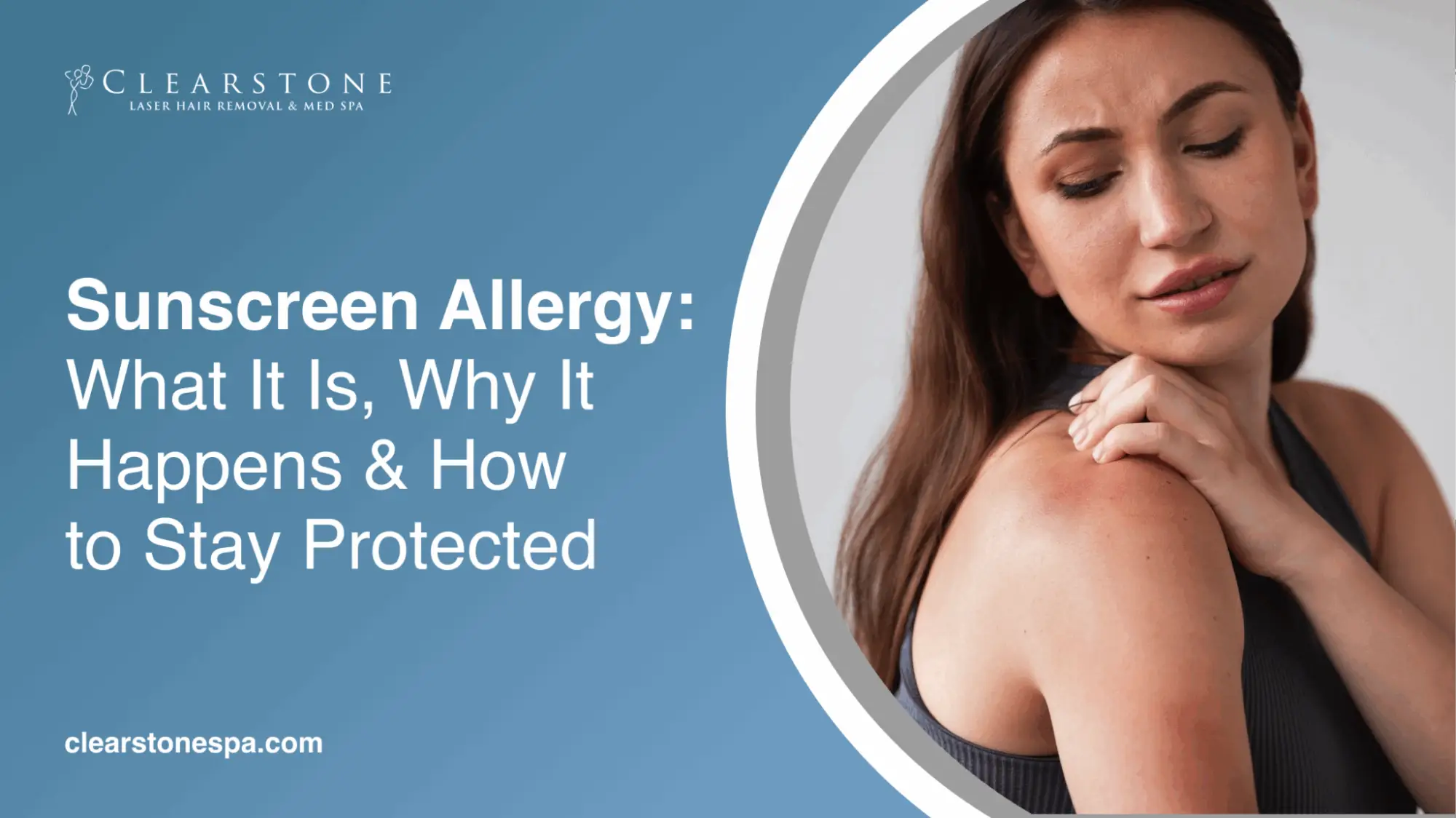
But what happens when sunscreen, instead of protecting us, irritates? That familiar tube of SPF may suddenly trigger redness, itching, or a rash. You might be experiencing a sunscreen allergy a less talked-about but genuine concern for many.
While rare, these reactions can range from mildly annoying to seriously uncomfortable. It’s frustrating, especially since sunscreen is significant for skin health.
In this blog, we’ll explain everything you need to know about sunscreen allergies, from what causes them and how to spot the symptoms to finding safer alternatives and tips for prevention. We want to help you stay protected and comfortable, even with sensitive skin.
What is A Sunscreen Allergy?
A sunscreen allergy is an adverse skin reaction that occurs when the body’s immune system or the skin itself negatively responds to one or more specific ingredients within the sunscreen formulation.
These reactions are not uniform; they vary significantly in intensity and manifestation, ranging from a subtle, localized irritation to more widespread and severe allergic symptoms. Understanding the nuances of these reactions is key to identifying and managing them.
There are primarily two main types of contact dermatitis that can be triggered by sunscreen:
1. Irritant Contact Dermatitis
Irritant contact dermatitis is a common reaction, especially for those with sensitive skin or conditions like eczema or rosacea. Unlike allergic reactions, it’s a non-immune response to irritants or high concentrations that overwhelm the skin’s barrier.
Symptoms include:
- Stinging or burning sensation upon application
- Redness or blotchiness at the applied area
- Dryness or flakiness
Depending on the irritant concentration and skin sensitivity, this localized reaction tends to vary in severity, especially in individuals with compromised skin barriers.
2. Allergic Contact Dermatitis
Allergic contact dermatitis is less common but more severe and delayed. It occurs when the immune system identifies a sunscreen ingredient as harmful and reacts after prior exposure.
Symptoms include:
- Intense itching
- Red, bumpy rash or blisters
- Swelling, especially around thin skin areas (like the eyes)
- Rash spreading beyond the applied area
- Crusting or oozing if blisters rupture
The reaction typically appears 24–72 hours after exposure, making it hard to identify the trigger.
Photoallergic Contact Dermatitis (A Subset of Allergic Reactions)
Photoallergic contact dermatitis is a particularly tricky form of allergic contact dermatitis relevant to sunscreens. In this scenario, the sunscreen ingredient itself is not the allergen. Instead, it becomes allergenic only after it reacts with UV light (specifically UVA rays) on the skin. The UV light chemically alters the sunscreen ingredient, creating a new compound that your immune system recognizes as an allergen.
This type of reaction is unique because:
- It only occurs on sun-exposed skin.
- It can appear even in areas where the sunscreen was applied very thinly, but exposed to the sun.
- The reaction can be severe, often resembling an exaggerated sunburn or a persistent eczema-like rash.
What Causes Sunscreen Reactions? Identifying Common Triggers
Identifying the cause of a sunscreen reaction can be tricky due to the variety of ingredients, but common culprits include:
- Chemical UV Filters: These absorb UV rays and may cause allergic reactions. Oxybenzone, Avobenzone, Octinoxate, Octocrylene, and PABA derivatives are key offenders.
- Fragrances & Preservatives: Fragrances, even in “unscented” products, and preservatives like parabens and methylisothiazolinone are common irritants.
- Photocontact Dermatitis: Some ingredients, including chemical filters and plant extracts, can cause reactions when exposed to sunlight.
Moreover, certain medications and skincare treatments (like retinoids) can increase skin sensitivity, and repeated exposure can lead to slow sensitization, causing reactions to products previously tolerated.
Spotting a Sunscreen Allergy: Symptoms to Watch For
Recognizing the signs of a sunscreen reaction is the first step towards managing it. Keep a vigilant eye out for these indicators, noting their appearance and location:
- Redness or Rash: This is often the most immediate and visible sign, appearing directly where the sunscreen was applied. It can range from a faint flush to a prominent red patch.
- Itchy or Burning Sensation: A persistent or intense itch, sometimes accompanied by a stinging or burning feeling, is a strong indicator of irritation or allergy.
- Small Bumps, Hives, or Blisters: These can develop on the skin surface. Hives (urticaria) are raised, itchy welts, while blisters are small, fluid-filled sacs that indicate a more severe inflammatory response.
- Swelling or Tenderness: The affected skin may feel puffy or swollen to the touch, often accompanied by pain or tenderness. This is particularly noticeable in areas with thin skin, like around the eyes or on the face.
- Eczema-like Patches: The rash may resemble eczema, presenting as dry, scaly, itchy patches, especially in sun-exposed areas like the face, neck, chest, and arms.
- Widespread Reaction: In more severe allergic cases, the rash might spread beyond the areas where sunscreen was directly applied, indicating a systemic immune response.
Pay attention to when symptoms appear. Immediate stinging might suggest irritant contact dermatitis, while a delayed rash (24-72 hours later) with intense itching is more typical of an allergic reaction.
How to Confirm a Sunscreen Allergy
If you suspect a sunscreen reaction, take these steps:
- Discontinue Use: Stop using the product immediately.
- At-Home Patch Test: After your skin clears, apply a small amount to a discreet area and check for a reaction within 24-72 hours. If a reaction occurs, stop using it.
- Consult a Dermatologist: For severe or recurring reactions, a dermatologist can perform patch or photo-patch testing to identify specific allergens and guide your sunscreen choices.
Who’s Most at Risk?
Specific individuals are more prone to sunscreen reactions, including:
- Children & Babies: Their delicate, thin skin is more susceptible to irritation.
- People with Skin Conditions: Conditions like eczema, psoriasis, or rosacea compromise the skin barrier, increasing sensitivity.
- Sensitive or Allergy-Prone Skin: Some people naturally react more to environmental triggers or ingredients.
- Users of Prescription Skincare or Medications: Treatments like retinoids or antibiotics can thin the skin and heighten sensitivity.
- Athletes or Heavy Sweaters: Sweat and friction can increase ingredient penetration, leading to irritation.
How to Treat a Sunscreen Reaction
Mild Reactions (Redness, Itching, Dryness):
- Rinse with a mild, fragrance-free cleanser.
- Apply cool compresses for relief.
- Use a fragrance-free moisturizer with soothing ingredients.
- Apply hydrocortisone cream for itching (under medical guidance).
- Take antihistamines for generalized itching.
- Avoid scratching and stop using the sunscreen.
Moderate to Severe Reactions (Blistering, Swelling):
Seek medical attention for prescription treatments like corticosteroids, more potent antihistamines, or antibiotics. Severe cases may require blister drainage.
Best Sunscreen Options for Sensitive or Allergy-Prone Skin
The good news is that a sunscreen allergy doesn’t mean you’re doomed to sun damage. Many practical and gentle options are available:
Mineral (Physical) Sunscreens: These are almost always the preferred choice for sensitive or allergy-prone skin. They contain active ingredients that work by creating a physical barrier on the skin’s surface, reflecting and scattering UV rays away from the skin.
Zinc Oxide: A broad-spectrum filter (protects against both UVA and UVB) that is highly stable and rarely causes irritation or allergic reactions. It’s often recommended for the most sensitive skin types, including babies.
Titanium Dioxide: Also a broad-spectrum filter, though it offers slightly less UVA protection than zinc oxide. It is also very gentle and well-tolerated.
The FDA generally recognizes both zinc oxide and titanium dioxide as safe (GRASE). Modern formulations have significantly improved texture, reducing the chalky white cast often associated with older mineral sunscreens.
When shopping for sensitive skin-friendly sunscreens, scrutinize the labels for these keywords:
How to Prevent Sunscreen Allergies
Prevention is always better than treatment. Adopt these practices to minimize your risk of getting a sunscreen allergy:
- Always Do a Patch Test with New Products: Before applying a new sunscreen to your entire face or body, perform a patch test. Apply a small amount to a discreet area (e.g., inner forearm, behind the ear) for at least 48-72 hours. Observe for any signs of reaction.
- Apply Correctly: Apply sunscreen generously (about a nickel-sized amount for the face alone) 15–20 minutes before sun exposure to allow it to set fully.
- Choose Mineral Sunscreens as a First Choice: Opt for zinc oxide and titanium dioxide-based formulas, especially if you have sensitive or allergy-prone skin, or for children.
- Scrutinize Ingredient Lists: Become familiar with ordinary chemical UV filters, fragrances, and preservatives that tend to cause issues and actively avoid them.
- Avoid Multitasking Products: While convenient, SPF moisturizers with numerous active ingredients (like high concentrations of AHAs, BHAs, retinoids, or potent antioxidants) can increase the likelihood of irritation or unpredictable reactions. Keep your SPF separate and simple.
- Don’t Combine Too Many Skincare Products at Once: Layering multiple active ingredients, particularly new ones, can heighten skin sensitivity. Introduce new products one at a time to identify any potential irritants easily.
- Practice Comprehensive Sun Protection: Sunscreen is just one tool. Supplement its use with protective clothing (UPF swimwear, long sleeves), wide-brimmed hats, sunglasses, and seeking shade, especially during peak UV hours (10 AM – 4 PM). This reduces your reliance on very high SPF and continuous application, lessening potential exposure to allergens.
When to Seek Dermatologist Guidance
While mild sunscreen reactions, such as slight redness or itching, can be managed at home with rest, hydration, and barrier creams, some symptoms require professional attention.
A dermatologist can:
- Accurately diagnose your skin reaction.
- Conduct allergy tests (e.g., photo-patch testing) to identify specific triggers.
- Prescribe targeted treatments to reduce inflammation or irritation.
- Recommend a safe, effective sunscreen routine tailored to your sensitive skin.
Pro Tip: If your reaction is persistent or worsening and includes swelling, blistering, or pain, don’t delay professional consultation.
A sunscreen allergy might feel like a setback, but it doesn’t have to stop you from protecting your skin. Sunscreen is one of the most essential skincare products to shield ourselves from harmful UV rays, prevent premature aging, and lower the risk of skin cancer.
The key is making informed choices. You can stay protected without irritation or worry by understanding your skin’s sensitivities, patch-testing new products, and selecting gentle, mineral-based formulas. With extra care, you can enjoy the sun while keeping your skin healthy and comfortable.
If you want to boost your skin, consider trying skin rejuvenation treatments at Clearstone Laser Hair Removal & Med Spa. They’re a great way to support your skin’s health and maintain a natural, radiant glow.
Clearstone Laser Hair Removal & Med Spa: Expert Care for Sensitive Skin
Dealing with a sunscreen allergy can feel limiting, especially when doing everything right to protect your skin. Even with label checks, patch tests, and the gentlest formulas, sensitive or allergy-prone skin can still react, leaving behind dullness, uneven texture, or stubborn pigmentation.
That’s where Clearstone Laser Hair Removal & Med Spa steps in to soothe and revitalize your skin. Their advanced rejuvenation treatments are crafted to support sensitive skin without compromise, helping you achieve smoother, brighter, more youthful-looking skin even if you’re prone to irritation.
Here’s how Clearstone helps your skin thrive:
- IPL Photofacial – Fades pigmentation and sun-induced discoloration, enhancing clarity and radiance.
- VI Peel – A skin-refreshing chemical peel that gently resurfaces and improves tone without harshness.
- Microdermabrasion & Dermaplaning – Gently exfoliate buildup for refined texture and a healthy glow.
- Microneedling – Encourages collagen renewal and enhances skin firmness, even for reactive skin types.
- Laser Treatments – Target discoloration, scarring, or visible vessels with precision and care.
Book your free consultation and begin your journey toward supple, glowing, and rejuvenated skin, with expert care you can trust.